
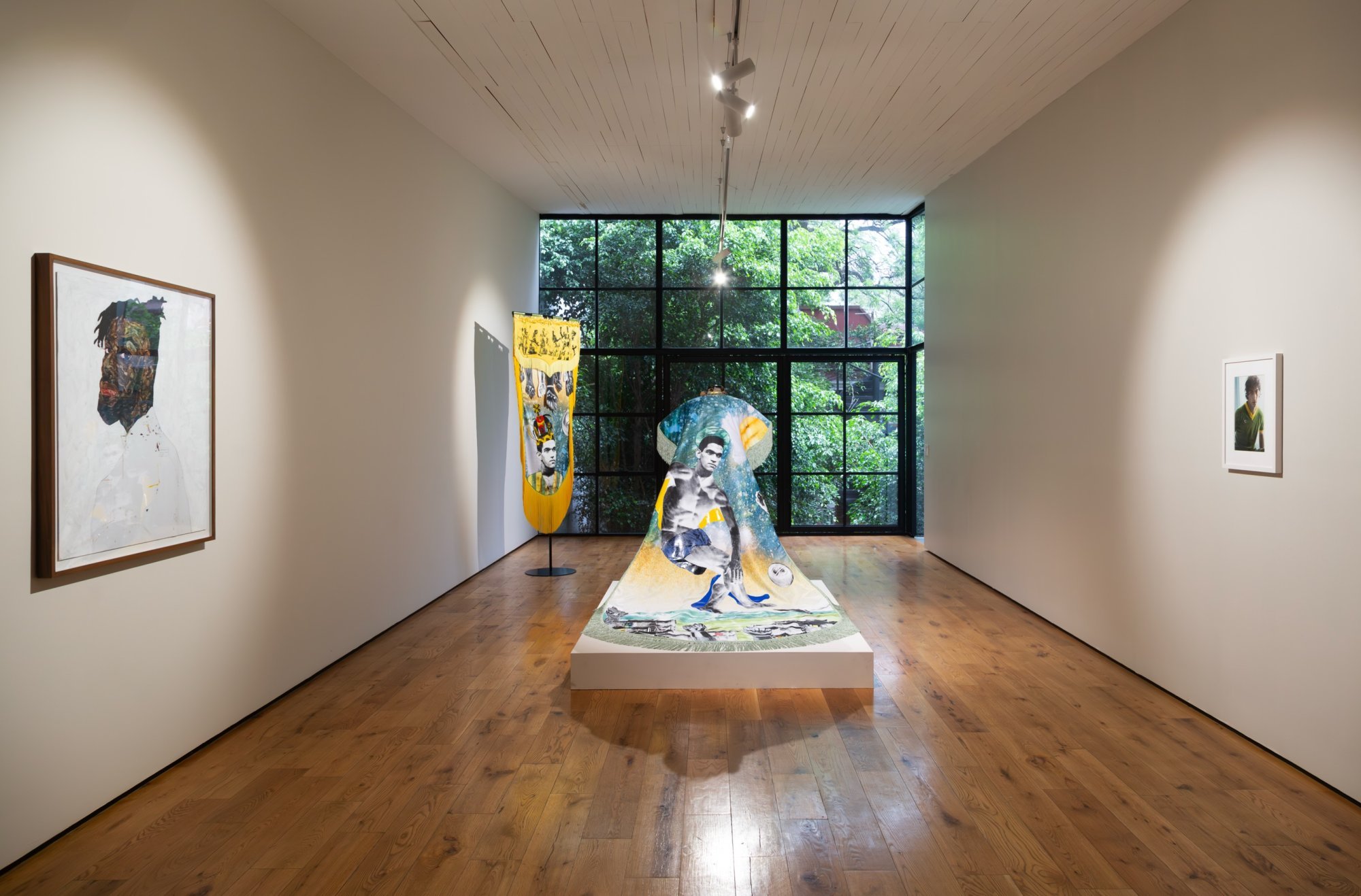
© Once Upon a Field, Mexico City, Mariane Ibrahim Gallery
For a long time, when people spoke of the African art market, the conversation centred mainly on the artists: their international visibility, their presence at art fairs, in galleries or at auctions. Far less attention was paid to those who buy their works.
Yet something is changing. A new generation of African collectors and those from the diaspora are gradually making their mark. I believe this shift goes far beyond the question of the market. Buying a work by an African artist is, of course, a way of supporting a career. But it is also about deciding where our artistic heritage is built, who preserves it and to whom it will be passed on.
A market that is growing
The figures show, first and foremost, that interest in African artists is not waning despite the general slowdown in the art market. According to ArtTactic, auction sales of modern and contemporary African art reached $62.8 million in 2025, up 42.6 per cent year-on-year. The number of lots sold reached 4,785, its highest level since 2016. In Nairobi, the Art Auction East Africa 2025 also saw 45 per cent of buyers being first-time purchasers.
This trend coincides with the growth of private wealth on the continent. The Africa Wealth Report 2025 estimates that Africa is now home to around 122,500 millionaires and forecasts a 65 per cent increase in this population over the next decade.
This does not, of course, mean that these new fortunes will automatically be channelled into art collections. However, an economic foundation now exists for a local art collecting market to develop further.
Who will preserve African art today?
The history of African art is also a history of displacement. A considerable part of the continent’s historical heritage is now located outside Africa. Debates surrounding restitution regularly remind us just how inextricably linked the question of ownership of artworks is to that of memory.
With contemporary art, we have the opportunity to write a different story. I believe it is important that works produced today in Dakar, Lagos, Accra, Nairobi, Bamako or Johannesburg can find their way into collections in Paris, London or New York. International circulation is part of the recognition of artists. But it seems to me just as essential that a significant proportion of these works remain in the hands of African collectors, both on the continent and in the diaspora.
Yet the market is still largely outward-looking. According to data cited by ArtTactic from the Art Basel and UBS Art Market Report 2026, only 30 per cent of the value of sales made by African dealers in 2025 was intra-regional, the lowest proportion among the eleven regions studied.
It is a paradox: African art is enjoying growing global visibility, yet its commercial ecosystem remains insufficiently structured to allow works to circulate easily within the continent itself.
Collecting is also about taking a stand
Above all, I believe that collectors’ motivations are changing. Internationally, the Art Basel & UBS 2025 survey shows that 80 per cent of the high-net-worth collectors surveyed plan to pass on their collection to their children or spouse. Among Generation Z collectors who have themselves inherited artworks, nearly 90 per cent have kept them.
These figures resonate with me particularly because they place art within a much longer timeframe than that of a single transaction.
A collection tells a story not only of the person who built it, but also of their era. The artists we choose to support today may well be the ones through whom future generations will come to understand our societies, our concerns, our cities, our identities and the changes we have undergone.
Collecting an African artist’s work today is therefore not simply a matter of asking: will this piece increase in value? It is also a question of asking: what story do I wish to preserve?
Becoming active participants in our own heritage
This is probably what interests me most about the emergence of African collectors: the shift from being a spectator to becoming a participant.
It is not a question of wanting to keep African art ‘in Africa’, nor of pitting African and international collectors against one another. On the contrary, artists need to circulate and be collected everywhere.
But a sustainable artistic ecosystem cannot depend solely on external perspectives and purchasing power.
It also needs people in Lagos, Dakar, Johannesburg, Nairobi, Accra and Abidjan – as well as within the diasporas – who decide that a work deserves a place in their homes, to be preserved, its story told and, perhaps one day, passed on.
This, too, is how a cultural heritage is built. And perhaps the true rise of African collectors will not be measured solely by the number of works purchased or the records set at auction, but by what these collections will tell us about our era in twenty, thirty or fifty years’ time.